
LiftMaster Installation Instructions: A Comprehensive Guide
Embark on a seamless garage door opener upgrade! This guide, alongside the 050Actwf manual and 880LM panel instructions, ensures a successful installation process.
Safety Precautions Before Installation
Prioritize safety throughout the LiftMaster installation! Disconnect the garage door opener’s power supply at the breaker box before commencing any work. Never attempt installation if you’re uncomfortable with electrical or mechanical tasks; consult a qualified professional.
Ensure the garage door is balanced correctly – an improperly balanced door can cause severe injury. Keep children and pets away from the installation area. Wear appropriate safety glasses and gloves.
Review the 050Actwf manual thoroughly for specific safety warnings related to your model. Familiarize yourself with the function of safety sensors and never disable them. Always test the safety reversal system after installation to confirm proper operation. Ignoring these precautions could lead to serious harm.
Tools and Materials Required
Gather essential tools for a smooth LiftMaster installation! You’ll need a ladder, safety glasses, work gloves, and a socket wrench set. A drill with various bits, a screwdriver set (Phillips and flathead), and a level are also crucial.
Materials include the LiftMaster opener kit (refer to package contents), mounting hardware (brackets, bolts, nuts), wire connectors, and potentially wood screws for header bracket attachment.
Depending on your garage, you might require a stud finder, wire strippers, and electrical tape. Having the 050Actwf manual handy will confirm any model-specific requirements. Ensure all tools are in good working order before starting. A helper can also be beneficial for lifting and positioning components.
Understanding Your LiftMaster Model
Familiarize yourself with your LiftMaster opener before beginning! Different models, like those utilizing the 880LM Smart Control Panel, have unique features. The 050Actwf manual is your primary resource for model-specific details.
Understanding the components – power head, rail system, door arm, and safety sensors – is vital. Knowing how these parts interact ensures correct assembly and functionality.
Carefully review the included diagrams and specifications. This will help you identify key parts during installation and troubleshoot potential issues. Recognizing your model’s capabilities maximizes its benefits and ensures a safe, efficient operation. Proper understanding streamlines the entire process.
Identifying Key Components
Locate and understand each part before starting! The power head houses the motor and electronics, driving the entire system. The rail system guides the door’s movement, assembled from multiple sections. The door arm connects the opener to the garage door itself, transferring force for lifting.
Crucially, identify the safety sensors – these protect against door closure on obstructions. Also, find the travel limit adjustments, controlling how far the door opens and closes. The wall control provides manual operation, while the remote controls offer convenient access.

Refer to your LiftMaster 050Actwf manual for detailed diagrams. Knowing each component’s function is essential for correct installation and future maintenance.
Checking Package Contents
Verify all parts are present before beginning installation! Your LiftMaster package should include the power head, rail sections, a garage door arm, safety sensors, a wall control, and remote controls. Confirm the header bracket, mounting hardware (bolts, nuts, washers), and chain or belt are also included.
Carefully compare the received items against the parts list in your 050Actwf manual. Missing components will halt progress. Note any discrepancies immediately and contact LiftMaster support. Don’t assume parts from a previous installation are compatible.

Proper inventory ensures a smooth, frustration-free setup. A complete package is the first step towards a successfully installed LiftMaster opener.
Preparing the Garage Door
Prior to LiftMaster installation, your garage door requires preparation! Begin by thoroughly inspecting the door’s balance – it should remain stationary midway through its travel. An unbalanced door strains the opener and compromises safety. Disconnect any existing garage door opener by pulling the emergency release cord; this prevents accidental operation during installation.
Visually assess the door’s springs, hinges, and rollers for wear or damage. Address any issues before proceeding, as a faulty door will negatively impact the new opener’s performance. Ensure the door moves freely and smoothly along its tracks.
A well-maintained door is crucial for optimal LiftMaster functionality.
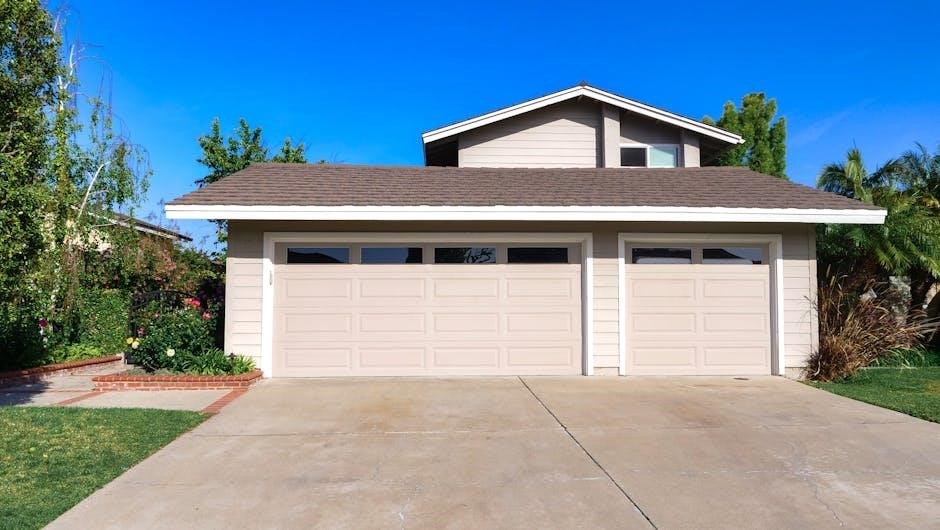
Balancing the Garage Door
Proper garage door balance is paramount for safe and reliable LiftMaster operation. Disconnect the opener (if present) and manually lift the door to approximately halfway. The door should remain stationary; it shouldn’t drift upwards or slam downwards.
If the door exhibits imbalance, do not proceed with the installation. Contact a qualified garage door technician to adjust the springs. Incorrect spring tension can cause serious injury or damage to the door and opener.
A balanced door minimizes strain on the LiftMaster, extending its lifespan and ensuring smooth, consistent performance. Regularly check balance, especially after any adjustments or repairs.
Disconnecting the Existing Opener (If Applicable)
Before installing your new LiftMaster, safely disconnect any existing garage door opener. First, pull the emergency release cord to disengage the opener from the door. This will allow manual operation.
Next, carefully disconnect the power supply to the old opener at the circuit breaker. Always verify the power is off before proceeding with any electrical connections. Detach the garage door arm from the door bracket and remove any wall controls or remote control receivers.
Finally, completely remove the old opener and rail system, ensuring all mounting hardware is also removed. This prepares the garage for the new LiftMaster installation.
Installing the Rail System
Begin the installation by assembling the LiftMaster rail sections. Carefully connect each section according to the included diagrams, ensuring a secure and stable connection. Once assembled, position the rail system within the garage, aligning it with the garage door’s travel path.
Next, attach the rail to the header bracket, utilizing the provided mounting hardware. Ensure the bracket is securely fastened to a solid ceiling joist or header. Proper alignment is crucial for smooth operation. Double-check all connections for tightness before proceeding.
This foundational step sets the stage for mounting the power head and connecting the door arm.
Assembling the Rail Sections
Start by carefully unpacking all rail components, verifying against the parts list to ensure everything is present. Typically, the rail comes in multiple sections designed for easy assembly within the garage space. Connect the sections using the provided joining sleeves or bolts, tightening them securely.
Pay close attention to the rail’s curvature and ensure it’s oriented correctly for proper door travel. Some models may require specific section order; consult your LiftMaster 050Actwf manual for clarification. A properly assembled rail forms the backbone of the entire system, so precision is key.
Double-check all connections for stability before moving on.
Attaching the Rail to the Header Bracket
Once the rail is fully assembled, carefully position it against the header bracket mounted above the garage door opening. Align the rail’s mounting holes with those on the bracket, ensuring a flush and secure fit. Use the bolts and washers provided in your LiftMaster kit to fasten the rail firmly to the bracket.
Proper alignment is crucial for smooth operation and to prevent binding. Double-check that the rail is level and securely attached before proceeding. Refer to the 050Actwf manual diagrams for visual guidance on correct bracket placement and rail orientation.
Tighten all bolts to the manufacturer’s specifications.
Mounting the Power Head

With the rail securely attached, carefully lift the LiftMaster power head into position. Align the mounting holes on the power head with those on the rail assembly. Utilize the provided hardware – typically bolts and washers – to connect the two components, ensuring a stable and vibration-resistant connection.
Pay close attention to the orientation of the power head, referencing the diagrams in your 050Actwf manual. Incorrect positioning can hinder operation. Tighten all bolts securely, but avoid over-tightening, which could damage the unit.
Confirm the power head is firmly mounted before moving on to the next step.
Connecting the Garage Door Arm
After securely mounting the power head, attach the garage door arm to both the power head and the garage door itself. Align the arm with the corresponding brackets on each component, ensuring a smooth and direct connection point. Use the supplied hardware – often a cotter pin or clip – to firmly secure the arm to the power head.
Next, connect the arm to the garage door using the provided bracket and hardware. Adjust the arm’s length to achieve optimal door travel, consulting the 050Actwf manual for specific guidance. Proper adjustment is crucial for smooth operation and preventing strain on the opener.

Double-check all connections for tightness and security.
Installing the Safety Sensors
Safety is paramount! Install the safety sensors, crucial for preventing the door from closing on obstructions. Position these sensors approximately six inches above the floor on either side of the garage door opening, facing each other. Ensure they are aligned and free from obstructions like tools or debris.
Wiring the sensors involves connecting them to the designated terminals on the LiftMaster power head. Refer to the 050Actwf manual for precise wiring diagrams. Incorrect wiring can compromise the safety system, so meticulous attention to detail is vital.
Test the sensors frequently during installation and after.
Positioning the Sensors
Optimal sensor placement is key for a functioning safety system. Mount the safety sensors on both sides of the garage door opening, ensuring they face each other directly. A recommended height is approximately six inches above the floor; this prevents larger objects from passing through undetected.
Alignment is critical – the sensors must be perfectly aligned for reliable operation. Use the included brackets to secure them firmly and adjust their angles as needed. Avoid pointing them at windows or reflective surfaces, which can cause interference.
Maintain a clear path between the sensors, free from obstructions like tools, boxes, or hanging items.
Wiring the Safety Sensors

Connect the sensor wires to the designated terminals on the LiftMaster power head. Typically, these are labeled “Safety Sensor” or similar. Ensure the wires are securely fastened to prevent accidental disconnections during operation. Double-check the polarity if specified in your model’s 050Actwf manual.
Use appropriate wire connectors for a reliable connection. Avoid loose connections, which can cause intermittent safety issues. Carefully route the wires along the wall or ceiling, keeping them away from moving parts.
Test the connection after wiring. A properly wired system will illuminate the sensor indicator lights on the power head.
Setting Travel Limits
Precisely define your garage door’s open and close positions using the travel limit adjustments on the LiftMaster power head. These settings prevent over-travel, safeguarding your door and opener from damage. Consult the 050Actwf manual for specific instructions tailored to your model.
Begin by adjusting the “up” travel limit, ensuring the door opens to the desired height without obstruction. Then, set the “down” limit, stopping the door just above the floor. Incremental adjustments are key for accuracy.
Test the limits repeatedly, observing the door’s movement and making fine-tune adjustments as needed. Proper travel limits are crucial for safe and reliable operation.
Programming the Remote Controls
Effortlessly connect your LiftMaster remote controls to the opener for convenient access. Locate the “Learn” button on the power head – its position may vary, so refer to your 050Actwf manual for precise location. Press and release this button to initiate the learning process.
Within 30 seconds, press and hold the desired button on your remote control until the opener’s light flashes, confirming successful programming. Repeat this process for each additional remote.
If programming fails, ensure fresh batteries are installed in the remote and try again. Some models may require clearing existing codes before adding new ones – consult the manual.
Testing the LiftMaster Opener
After installation and programming, thoroughly test your LiftMaster opener to ensure optimal functionality and safety. Begin by using the wall control to operate the door – verify smooth, full travel in both directions.
Next, test each programmed remote control, confirming reliable operation from a reasonable distance. Pay close attention to the safety sensors; the door should immediately reverse upon obstruction.
Manually test the door’s balance by disconnecting the opener and lifting it halfway – it should remain stationary. If issues arise, revisit installation steps or consult the 050Actwf manual for troubleshooting.
Installing the Wall Control
Locate a suitable, accessible position near the service door for your LiftMaster wall control, ensuring it’s within sight of the garage door and away from obstructions. Mount the bracket securely using the provided screws.
Connect the wires from the power head to the wall control terminals, observing correct polarity as detailed in the 050Actwf manual. Ensure a snug fit to prevent disconnections.
Snap the wall control onto the mounted bracket. Test its functionality by pressing the button – the garage door should respond immediately. If it doesn’t, double-check wiring and power supply.

Troubleshooting Common Installation Issues
Door reverses unexpectedly? Verify safety sensor alignment and wiring, referencing the 050Actwf manual for detailed diagrams. Obstructions in the sensor path are a frequent cause.
Opener doesn’t respond to remote? Reprogram the remote following the instructions, ensuring it’s compatible with your LiftMaster model. Check battery levels as well.
Travel limits incorrect? Re-adjust the up and down travel limits using the adjustment screws on the power head, carefully observing the door’s full range of motion. Consult the manual for precise steps.
LiftMaster Smart Control Panel Installation (880LM)
Mounting the 880LM panel requires a suitable location near a power outlet and within Wi-Fi range. Securely attach the panel using the provided screws, ensuring it’s level.
Wiring is crucial; connect the panel to the LiftMaster opener following the detailed installation manual. Proper connections guarantee seamless communication and functionality.
Initial setup involves connecting to your home’s Wi-Fi network through the MyQ app. This enables remote control and monitoring of your garage door. Refer to the panel’s guide for specific app instructions and troubleshooting tips.
Understanding the LiftMaster Manual (050Actwf)

The 050Actwf manual is your primary resource for a successful LiftMaster installation. It details crucial safety precautions, component identification, and step-by-step instructions.
Pay close attention to the diagrams illustrating rail assembly, power head mounting, and safety sensor placement. These visuals clarify complex procedures, minimizing errors.

Familiarize yourself with the troubleshooting section to address common installation issues. The manual also explains programming remote controls and setting travel limits for optimal performance. Download a PDF copy for convenient access during installation, ensuring a smooth and efficient process.
Downloading LiftMaster Manuals (PDF)
Accessing LiftMaster manuals in PDF format provides convenient, on-demand guidance throughout your installation. Websites like downloadparadise.site offer quick access to these essential resources, including the 050Actwf manual.
Having a digital copy allows you to easily reference diagrams and instructions on a tablet or smartphone while working in the garage. This eliminates the need to constantly handle a paper manual.
Ensure you download the correct manual for your specific LiftMaster model to avoid confusion. PDF versions are ideal for printing specific pages or zooming in on detailed illustrations, streamlining the installation process.
Warranty Information and Registration
Protect your investment by understanding your LiftMaster opener’s warranty coverage. Registration is crucial for validating your warranty and ensuring prompt service if needed. Details regarding the warranty period and covered components are typically found within the 050Actwf manual.
Online registration is often the quickest and easiest method, usually accessible through the LiftMaster website. Keep your purchase receipt and model number handy during the registration process.
Proper registration guarantees access to potential repairs, replacements, or support services as outlined in the warranty terms, offering peace of mind after installation.
Post-Installation Maintenance
Ensure long-lasting performance of your LiftMaster opener with regular maintenance. Periodically inspect the track for obstructions and lubricate moving parts – refer to the 050Actwf manual for recommended lubricants.
Check the safety sensors monthly to confirm proper alignment and functionality; these are vital for safe operation. Tighten any loose bolts or screws on the rail system and power head.
Routine inspections prevent potential issues and extend the life of your opener. Consider a professional service check-up annually to address any hidden concerns and maintain optimal performance.